Neurodiversity refers to the diversity of human brains, all of us are unique in how we think, learn and act.
If someone is Neurodivergent, they are described as someone who’s brain works differently to what is considered more typical in society. Neurodivergent people experience and react to the world differently to ‘neurotypical’ people, meaning they have different strengths and struggles to consider.
It is estimated that 1 in 7 people in the UK are neurodivergent and so being aware of different neurodivergences means that you can offer tailored support for individuals to thrive.
There are a range of different types of neurodivergence, including:
It is common for someone to have more than one type of neurodivergence, this is known as ‘co-occurring conditions. Having co-occurring conditions creates unique experiences and challenges that are different from having just one condition.
To support Members, coaches, parents and volunteers, The Pony Club have created a series of Neurodiversity fact sheets that cover a range of neurodiversity.
There are a huge range of resources available to support understanding around Neurodiversity, below is a selection of links to helpful supporting resources.
Creating rallies, training sessions and competitions that are welcoming and accessible to everyone in The Pony Club community helps foster a supportive, judgement-free environment. When parents, guardians, coaches, volunteers, officials, and members with access needs are fully included, the whole community benefits — and recognising potential barriers is the first step toward removing them.
The Pony Club has created a Facilitating Physical Access resource to support event organisers plan accessible events.
There are a huge range of resources available to support understanding around accessibility in sport, below is a selection of links to helpful supporting resources.
A Reasonable Adjustment is an alteration to or consideration of an activity that may help to reduce the effect of a physical, or mental health condition, that places the person in question at a disadvantage compared to others. When applied to assessments or competitions, adjustments can only be made to the process or method; adjustments cannot be made to the criteria against which participants will be assessed. Competence must still be demonstrated.
A Reasonable Adjustment can be requested on the grounds of an impairment (physical or mental) that could be temporary or long term. Reasonable Adjustments may also be made in the case of members who wear religious clothing or for whom English is not their first language.
The Pony Club offers online Reasonable Adjustment Training to support and educate volunteers and coaches across the Pony Club network with how to support members who require alterations or considerations of an activity that may help to reduce the effect of a physical, or mental health condition, that places the person in question at a disadvantage compared to others.
Dates for up-coming Reasonable Adjustment Training can be found below, along with a link to the Reasonable Adjustment Policy and resources.
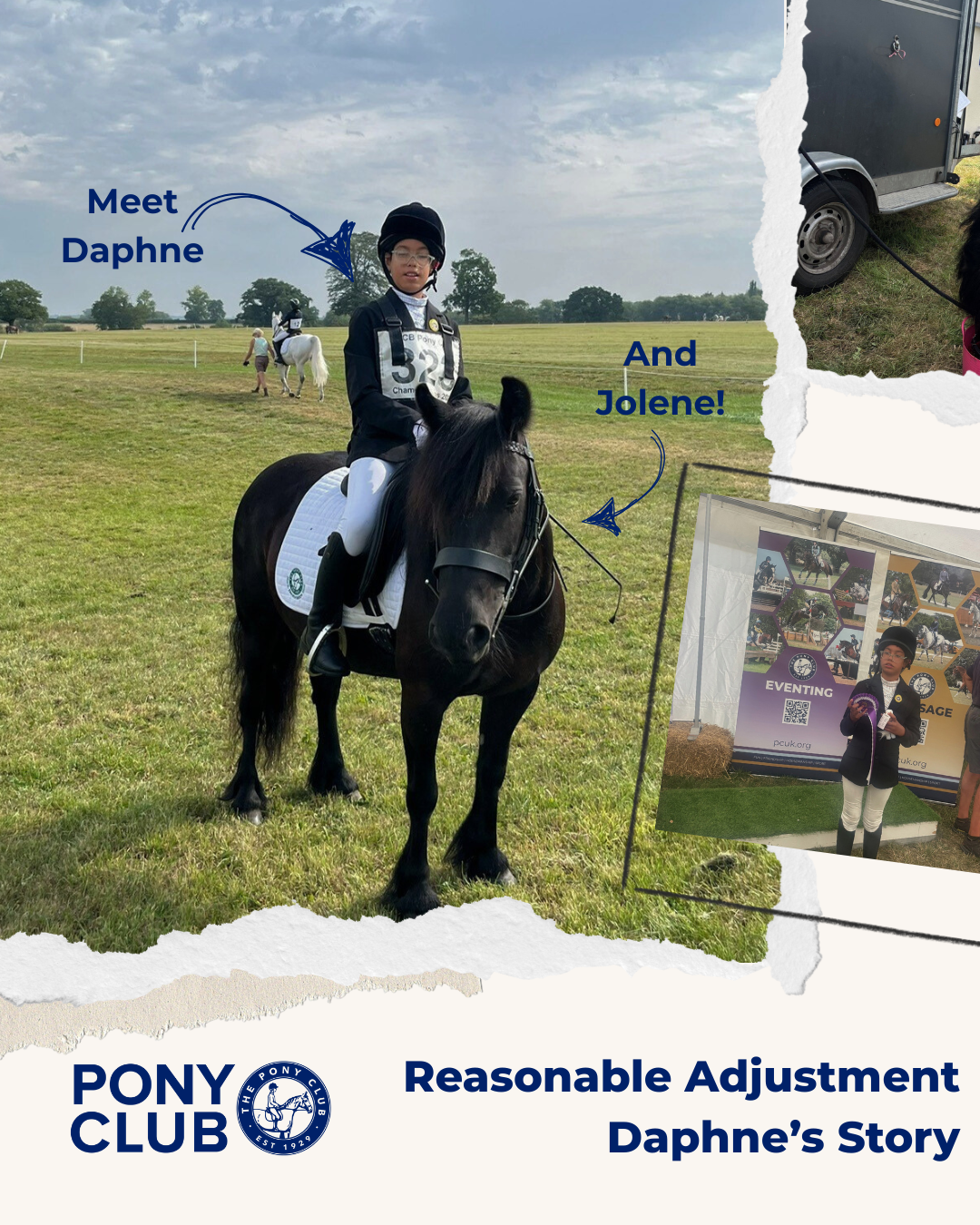
The Pony Club is dedicated to providing equal opportunities across the organisation, including at the JCB Pony Club National Championships. For the second year running, we were delighted to hold the Specialised Dressage, kindly sponsored by Agria; a supportive, educational class for those who may have alternative requirements to many other riders. One such Member is 10-year-old Daphne Powell of the North Herefordshire Hunt Branch.
Daphne competed at the JCB Championships this summer on Fell pony Jolene after learning about the opportunity and practicing her test at Area competitions and local shows. Her performance was fantastic, demonstrating a true partnership between pony and rider and earning a sixth-place rosette presented by Eventing legend Yogi Briesner.
The challenges that Daphne faces – cerebral palsy, visual impairment, learning difficulties, hydrocephalus and epilepsy – are made less of a potential barrier with the support of her family, Branch and peers, who encourage and assist in partaking in a variety of Pony Club activities.
As an active Member, Daphne participates in regular rallies alongside younger sister Edith, having attended every Mini Camp from the age of five as well as her first ‘Big Camp’ this summer! Highlights include representing her Branch at Junior Novice Mounted Games and Tetrathlon as well as Dressage. She is also the proud recipient of the 2024 Epitome of Pony Club award at her Branch and has recently passed her D+ Test with flying colours.
So, what does The Pony Club mean to Daphne’s family?
‘Pony Club is the one thing that both our daughters can genuinely do together.’ Jessica, Daphne and Edith’s mother, says. ‘Jolene is Daphne’s legs; she can keep up with her sister Edith and her friends. She might struggle academically and physically to keep up with some peers but on a pony she’s with them 100% and thrives. Our Pony Club is beyond supportive, and we cannot thank them enough.’ Fuelled by her success at the JCB Championships, Daphne aspires to reach the heights of Paralympic Dressage – we truly can’t wait to see what the future holds for this exciting young talent.