Smart Spring Grazing: Keeping Ponies Healthy with NAF
As winter comes to an end, many of us look forward to greener fields and longer days. However, spring grass brings big changes to your pony’s diet, and it’s important to understand how this affects their health and wellbeing. While winter grass can sometimes appear to offer very little nutrition, especially in busy or overgrazed paddocks, it still contributes more than we might realise. But once spring arrives, everything changes quickly.
Why Spring Grass Grows So Fast
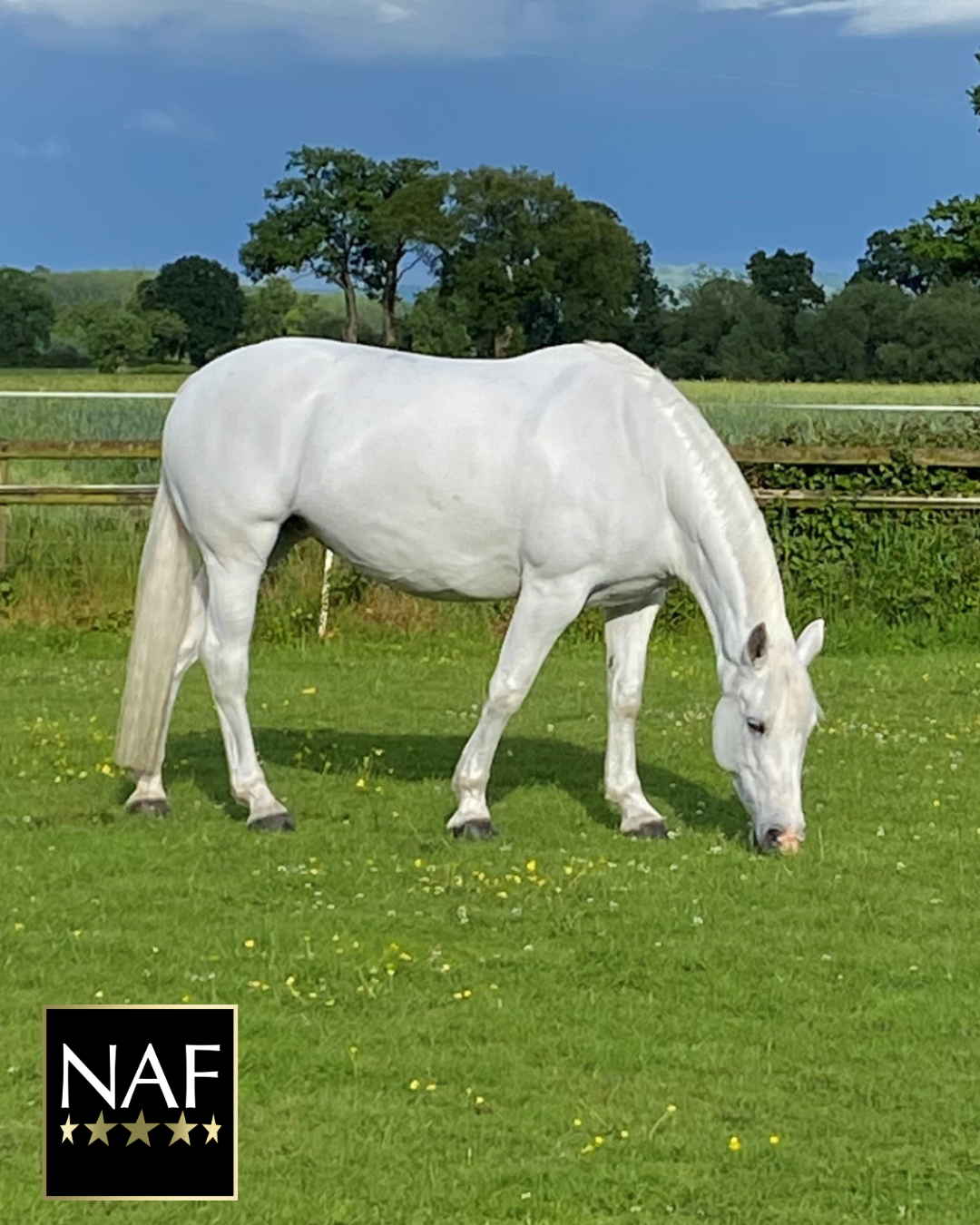
When the soil warms to around 5°C, grass begins to grow. Once temperatures reach roughly 10°C, the whole field enters its peak growing phase. This fast-growing spring grass is full of sugars and has good levels of protein, which can be both helpful and potentially risky depending on your pony’s needs.
Who Benefits Most?
Broodmares and Foals
Spring grass arrives at just the right time for pregnant or nursing mares. The extra energy and protein help support the mare’s increased needs and the healthy growth of her foal.
Ponies with a Busy Season
Your pony might be working harder in the spring with more hacking, rallies, training and competitions. Ponies with a busy season can make good use of the extra energy and protein in spring grass.
Who Needs to Be Careful?
Good Do‑ers
Ponies who haven’t lost winter weight can easily become overweight once spring grass appears. Extra weight increases the risk of laminitis and can impact their performance. Keep an eye on your pony’s weight using a weigh tape once a week.
Laminitis Awareness
Early Signs
Laminitis can happen at any time of year, but sudden weight gain or rich grass make spring a higher-risk time of year. Watch for:
- Difficulty turning
- A short, stiff walk
- Warmer hooves
- Shifting weight between feet
If you notice any of these signs, speak to your vet straight away.
Frosty Mornings
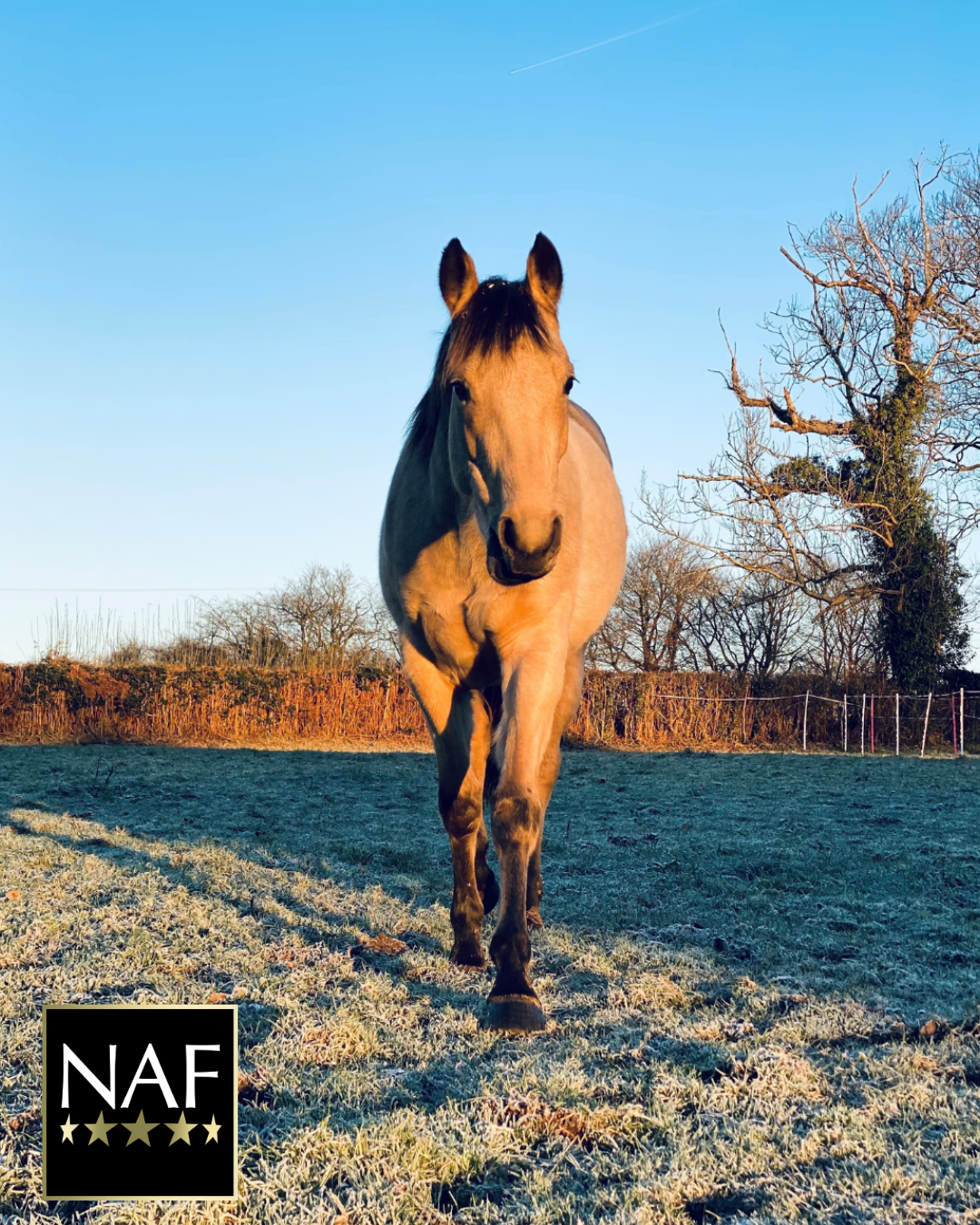
Bright but frosty mornings are especially risky. Sunlight makes the grass produce sugars, but the frost stops the plant using them to grow. That means sugar levels build up, which can be dangerous for ponies prone to laminitis. If possible, keep your pony off frosty grass until it has fully thawed, or offer alternative forage, such as hay, in the field.
Managing Grazing
If your pony needs their grass intake controlled, you can try:
- Grazing muzzles: make sure they fit well and your pony can still drink.
- Track systems: encourages movement while limiting grass.
- Night turnout: stabling during the day with night time turnout can be useful. They naturally eat less at night, and sugar levels in the grass are typically lower (depending on the weather).
.
Don’t Forget the Vitamins
Even healthy-looking grass can be low in important nutrients such as copper, zinc, selenium and magnesium. A good-quality balancer or vitamin and mineral supplement helps make sure your pony gets everything they need, especially if they’re in regular work.
For more information on caring for your horse or pony, visit NAF’s website.
Written by: Kate Hore, Head Nutritionist at NAF. RNutr (Animal), BETA ENFAR, R.Anim.Technol (Cert)